Thursday, October 6, 2011

Microsoft Games Can Make You Feeling Great


Games For Windows is a functional system, but there just isn’t enough support from other developers, and it’s a distant third to services like Steam (4.5 stars) and Impulse (3.5 stars). Games For Windows currently offers fewer than 200 full games, the majority of which published by Microsoft. There are many great games from last year, but the selection isn’t nearly as great as Steam’s.You can learn most of what you need to know about Microsoft’s PC game service from the fact that its website’s URL is on xbox.com. Games For Windows was built to be the Windows equivalent to Xbox Live, with integration between the two services for Gamertags and achievements.


More New Than Old

With a few exceptions, Games For Windows is strictly for new games. A few games from the original Xbox era like Fable and Grand Theft Auto: San Andreas are available in the marketplace, but besides that there isn’t any classic game appeal.


Games For Windows puts less emphasis on sales and bundle deals than Steam or Impulse.Newer games, like Fable III and Bulletstorm, can cost $30 to $50, while older titles like Prince of Persia: Warrior Within and Assassin’s Creed are only $10 to $20.


Integration with Xbox Live

There also isn’t any actual cross-platform gameplay, so you’re still dealing with fellow Games for Windows players in multiplayer and not the thousands of gamers on Xbox Live, even if you’re playing a port from the Xbox 360.Online content integrates with Xbox Live, so achievements and information is shared between the services. Unfortunately, that’s it for usefulness outside of buying and organizing games. There isn’t any friends list, so you can’t quickly keep track of who’s playing what.


Compared to the wealth of games and features in Xbox Live, Microsoft’s Games for Windows Marketplace is a disappointment. It feels like little more than a vestigial market, something Microsoft tried and then forgot about. If you want to download PC games, stick to Impulse or Steam, our Editors’ Choice online PC gaming marketplace.

Thursday, September 29, 2011

Battlefield 3: Give you the most realistic experience to stimulate

How does it hold up on a non-top of the line PC?

First, I should note that I’m not running at the recommended settings for Battlefield 3. More like somewhere between the minimum and recommended settings with a AMD Athlon X2 250 cpu, 4GBs of memory, Radeon 5750 gpu with 1GB of memory and the 64-bit version of Windows 7. While I now have the intense desire to upgrade my PC, the Battlefield 3 beta is flat-out the best looking PC game I’ve played. The game started with the maxed out 1600×1200 resolution and ran at around 30 fps except for when the action got heavy. I dropped my resolution down to 1400×950 and the frame rate was much smoother. Not bad for a 5000 series Radeon. I just wish there was a quicker way to get to the game options to fiddle around with the settings.


Breath deep and remember, it’s a beta

Once I was able to connect to a server and jump on to the Operation Metro map, the first thing I noticed was that there is a giant hole in the ground around the ‘A’ objective on the first part of the Rush map.  Fortunately, an opponent fell through the game world near me and I got a cheap and easy kill. There are also many parts of the map where you kind of jiggle in and out of the map while laying prone as if the game engine can’t decide it wants to drop you all the way down and force you to commit suicide. Getting trapped in the map like this is really troubling when your squad starts to spawn on you and they all get trapped too.

This is a beta so bugs like this are to be expected but the area where you can fall through the environment is so large that I wonder how it made it this far. Not that big of a deal for now, but DICE games do have a history of coming out buggy, so this makes me wonder if we’ll see similar things with all the other map when the game releases next month. DICE developers say that the beta isn’t representative of the final product, so there’s obviously still a good bit of polishing to do.


Operation Metro doesn’t quite feel like Battlefield.

I would have preferred playing the Caspian Border map, as it represents the kind of maps I am accustomed to from playing Battlefield 2. But I missed out on the limited time that DICE allowed people on to password-protected servers running the 64-player map . Operation Metro is a different animal with no vehicles to speak of, but it serves its purpose well in changing up the formula. The infantry-only map affords plenty of hiding spots for the defenders to camp and pick off targets while offensive players will want to make sure they stay in cover and keep their eyes on that row of hedges across the way. The most interesting moments in the map open up after the first two Rush objectives are taken, and the fight moves into the Parisian subway tunnels. That first stretch from the outside into the hole leading into the subway squeezes the action into a more confined and intense space where it becomes a game of picking opponents off with sniper rifles or laying down heavy suppression fire with the rocket launchers or machine guns.

Wednesday, September 28, 2011

Japan in the PC game industry have what kind of contribution

It's no accident that Western game development tech has surged ahead of Japan's. Western game development as we know it also has a strong a background in PC game development.Gaming's reached a turning point. Western games have more realistic graphics and physics than Japanese games. This isn't good or bad. It's true.There was a moment during the Tokyo Game Show, when I stood in line waiting to play the PS Vita. A trailer for Modern Warfare 3 rumbled across the big screen. It was followed by BioShock: Infinite. Those in line turned their heads and watched, all slack jaw. Regardless what you think of those games, the trailers are as impressive, if not more, than any summer blockbuster.


That doesn't mean all Western game developers make computer games. Many of them have spent their entire professional careers making strictly console games, and many of them, like Gears of War designer Cliff Bleszinski, grew up loving Japanese games. But Bleszinski got his start in computer games. These developers are able to speak both languages: computer and console. But so much of their DNA (and that of their companies) is in computer games, with their emphasis on tech. It's in the water and air they breathe.


Japan, on the other hand, has a strong background in arcade games and console games. This is why Japanese games are traditionally polished. You can't have popout and patches for offline cabinet games. Don't get me wrong, Japan holds two of the three platforms, one of which, the PS3, is incredibly powerful. But the PC, especially since the advent of graphics cards, has often pulled ahead. And unlike consoles, which don't become more powerful until the new generation starts, computers continue to become more and more powerful, keeping developers on their toes.


Meanwhile, in the West, many developers either have their own in-house engines or license (and then mod) engines. The idea of modding existing engines engines is very PC. So you get developers like BioWare licensing Epic's Unreal Engine and then creating a totally different experience than what Epic offers—and doing it over the course of the hardware generation. When the next generation of hardware launches, gaming will probably see a slew of new trilogies.There are Japanese game developers more than capable of creating powerful games, but it often feels like they spend so much of their development cycle working on a proprietary game engine and then never using it again. This is a mistake.

Tuesday, September 27, 2011

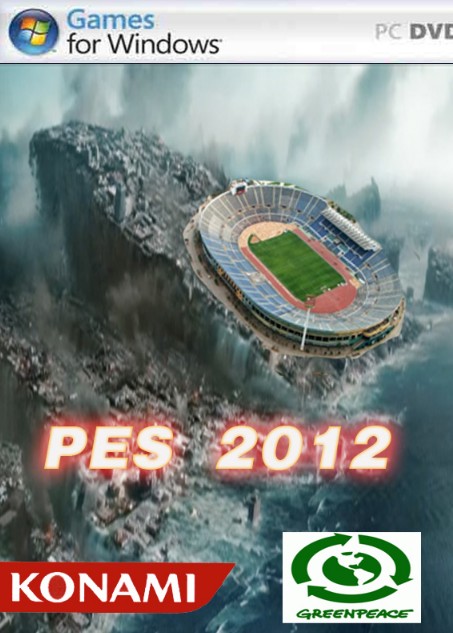
PES 2012 Make football more popular in the US

The publisher says it's set to introduce "a huge raft of advances" to the game's online component, all of which were "devised following extensive user feedback" during development.

Among the headline additions are eight player online matches, "a more realistic" Master League Online experience, Facebook integration and smoother matchmaking, which should see players pitted against likeminded souls. Annoying disconnecting players will also now "be blocked from
competitions".


Here are all the details in Konami's own words:

The game's Master League Online retains the competitive basis as users steer their club to glory against other like-mined users, but the popular option has been tailored to offer a more realistic experience. Team styles can now be altered to benefit the user's favoured playing style, with options to choose from balanced play, physical, speed, technique, set-pieces and teamwork. The use of contract periods for players has also been introduced and players may have to be sold if their wage and improved contract demands cannot be met. Likewise, the fitness - even injuries - of players is more realistic, with more continuity between matches.


PES 2012 is a game designed to play with and against friends, and the game now offers matches for up to eight people via the PlayStation 3, Xbox 360 and Windows PC versions. To complement this, Community Mode has been improved to give users access to a wider range of opponents. Community groups of up to 100 users can be joined, and there are Bulletin Boards for members to pass on messages to each other. Similarly, inter-community matches have been incorporated to add rivalry between the groups.


The general match-making elements of online play in PES 2012 have also been overhauled. Players are now more likely to be pitched against a rival whose manner resembles their own. Those disconnecting to thwart a defeat will also be blocked from competitions and players with poor reputations will be pitted against one another and the whole PES 2012 online system has been enhanced to offer a smoother experience.

Monday, September 26, 2011

CALL OF DUTY 2 to bring you a more authentic experience

There was a time when they said the first-person shooter couldn't be done on consoles, that it would always be a PC exclusive genre.

That all changed in 2001 when Bungie waltzed in with Halo: Combat Evolved, showing the world that, well, it was wrong.


It wasn't until 2005 that Call of Duty came to console when its second iteration hit Xbox 360. There are, of course, still plenty of people out there who swear by the keyboard/mouse combination over the game pad but the console community made Call of Duty in particular into a whole new beast.

They lapped up Call of Duty 2, making it the first 360 game to break the million sales record. The game's multiplayer thrived like never before thanks to Xbox LIVE and the additional map packs that were continuously fed to console commanders.


Xbox Live still stands out as a preferred platform for multiplayer out there. Its perhaps telling that Call of Duty as a franchise has now become somewhat synonymous with the 360 and certainly console gamers.